
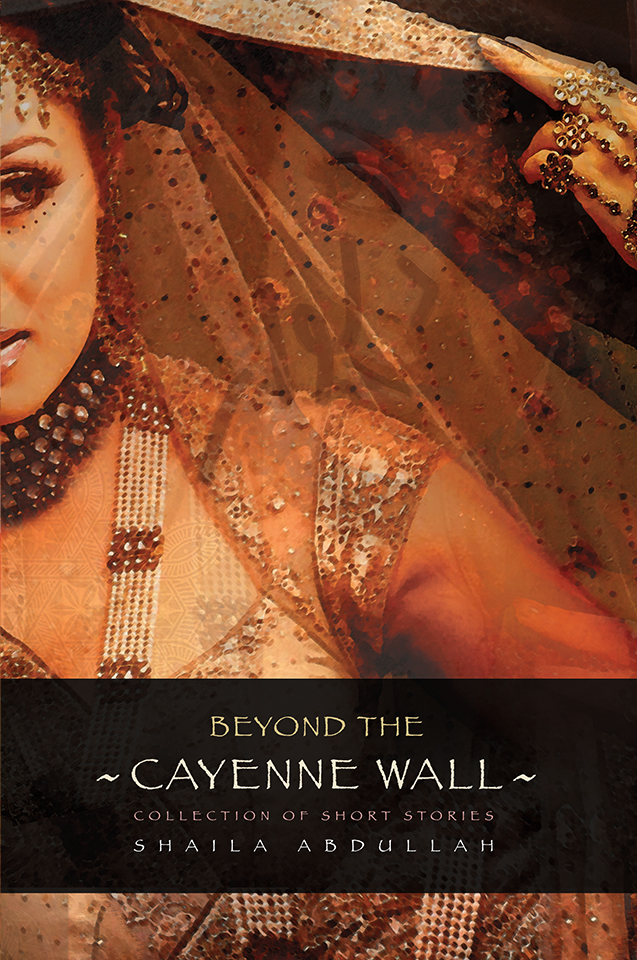
Beyond the Cayenne Wall
Beyond the Cayenne Wall captures the cultural chasm-and sometimes the collision between the East and the West-as the characters struggle to find their individualities despite the barriers imposed by society.
Publisher
iUniverse
Publication Date:
October 17, 2005
Language
English
Print Length:
114 pages
ISBN:
978-0595370092
Reviews
“Abdullah takes us into the hearts and minds, realities and yearnings, and daily existence of women young and aged in and from South Asia. Her stunningly beautiful prose and elegant iridescent descriptions of the land that these women love is juxtaposed with the brutality and coarseness of their everyday existence.” – Dr. Shirley Hord, author of Implementing Change
“In Beyond the Cayenne Wall, Shaila Abdullah presents short stories about the often tumultuous lives of young women in Karachi, Pakistan. She brings Pakistan’s largest city to life with shimmering, descriptive prose, and even includes a glossary of Urdu words used in the book. These stories are not for the faint-of-heart.” – Exotic Short Fiction
“Loved the portrayal of the city of Karachi, which I could strongly connect with, such as ‘there being so many nameless streets, yet nobody gets lost.’Every story is engraved in emotion, with each character having to face a unique struggle.” – Lara Zuberi, author of The Lost Pearl
“Beyond The Cayenne Wall tells 7 short stories of women we think we’ve seen, but never really heard about. Shaila Abdullah uses simple but powerful imagery interspersed with Urdu to generate the inclusive quality of “being there”. At the root of the stories are the cultural burdens women bear. Although the setting appears exclusively eastern, oddly enough, the struggles, disappointments, joys, and sorrows of these women transcend borders. Pending marriage, difficult conception, in-laws, and tradition are issues we can all relate to, and doing so through the prism of Eastern culture only makes us richer for it. What I appreciated most was the view into everyday life that is often overshadowed and outright forgotten in today’s political climate. Although the women are not always successful, they are always triumphant. Even when circumstances conspire against them and fortune turns its back, each of these women demands and receives small victories. Be it the mockery of a quickly hidden glance, the silence of hidden passion, the damning knowledge of a bully’s frailty, each story illustrates that sometimes the best part of victory is-modesty.” – Black Butterfly Review